Wang Xiangzhai’s Critique of Taijiquan — A Call to Restore the Essence
Translated from the original Chinese writings of Wang Xiangzhai (1930s)
Introduction
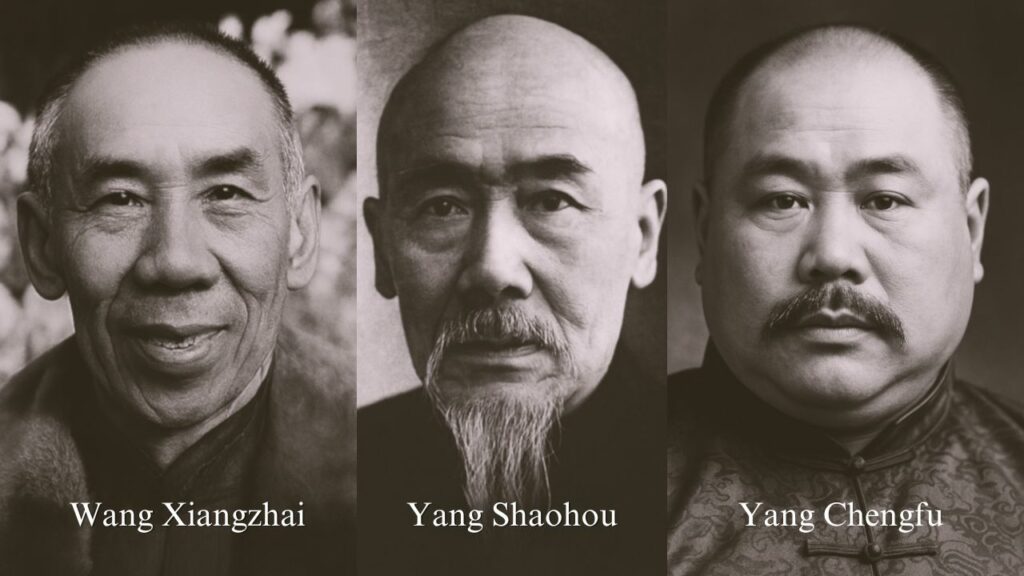
In the 1930s, the legendary founder of Yi Quan, Wang Xiangzhai (王苗斋), published a series of interviews and essays outlining his views on martial arts, internal cultivation, and the state of Taijiquan (Tai Chi).
In this now-famous passage—translated here in full—Wang reflects on the loss of internal substance in most Taiji practice, despite his deep respect for early masters such as Yang Shao Hou and Yang Cheng Fu.
This critique is not merely dismissive. Wang highlights the loss of essential internal principles in Taijiquan and calls for a return to authentic practice—guided by direct insight rather than forms empty of substance.
The following translation is based on Wang Xiangzhai’s written response in the article titled 《拳学要义-答记者问》 (“The Essentials of Boxing — Answers to a Reporter’s Questions”), which originally appeared in the Beiping (Beijing) Shen Bao newspaper in the early 1930s and was later compiled in collections such as 《大成拳论》 (On Dacheng Quan) and 《意拳正轨》 (The Orthodox Path of Yi Quan).
Full Translation of Wang Xiangzhai’s Critique of Taijiquan
Among the authentic lineage masters of Taijiquan, the Yang brothers—Shao Hou and Yang Cheng Fu—stand foremost. They were also my old friends. Thus, I know that this art indeed contains several important principles of force. Yet among a hundred practitioners, fewer than one truly grasps its essence. Even those who do often cannot embody it tangibly, as the foundational training in embodied understanding has long been lost—leaving the lower body without any real mechanism of force to speak of.
Originally, this art consisted of just three techniques—also known as the “Old Three Cuts” (Lǎo Sān Dāo), likely referring to its earliest combative methods. Master Wang Zongyue later expanded it to thirteen postures, which then evolved into as many as 140 or 150 movements. This proliferation is a major reason for the loss of authenticity.
As a health practice, it restrains the spirit and temperament, preventing true relaxation. As a combat art, it disturbs the limbs, turning a functional body into a rigid, mechanical entity—merely unsettling the student’s nerves and wasting their time.
As for its method of practice—this punch, that palm, a left leg, a right kick—it is pitiable and laughable. Against a skilled opponent, such practice is of no use. Even when facing someone who is not especially stiff or slow, a so-called Taijiquan master would find no way to apply their art. The result is that Taijiquan risks becoming nothing more than a lifeless series of postures—like positions recorded in a chess manual.
Over the past twenty years, most of its practitioners cannot distinguish truth from error—and even those who can, do not know how to act on it. Most students rely on hearsay rather than clear observation. And so, the art is being buried. What a great loss.
I sincerely hope that capable individuals within this tradition will urgently and rigorously reorganize it, so that it may thrive in the future. Should they succeed, they will be true allies in understanding this art.
I dare say I know Taijiquan deeply, and thus speak with such sharpness. Whether I’m praised or blamed, only the discerning will understand. Those who have truly gained something through their practice will likely nod in agreement—and quietly smile at my candor.
Attribution
This translation was prepared with respect to the original Chinese writings of Wang Xiangzhai. While every effort has been made to preserve the nuance of the original, minor phrasing adjustments were made for clarity in modern English. Sources referenced include archival publications and digital reprints from Taiji.net.cn and Shenyiquan.cn.
Who Was Wang Xiangzhai?
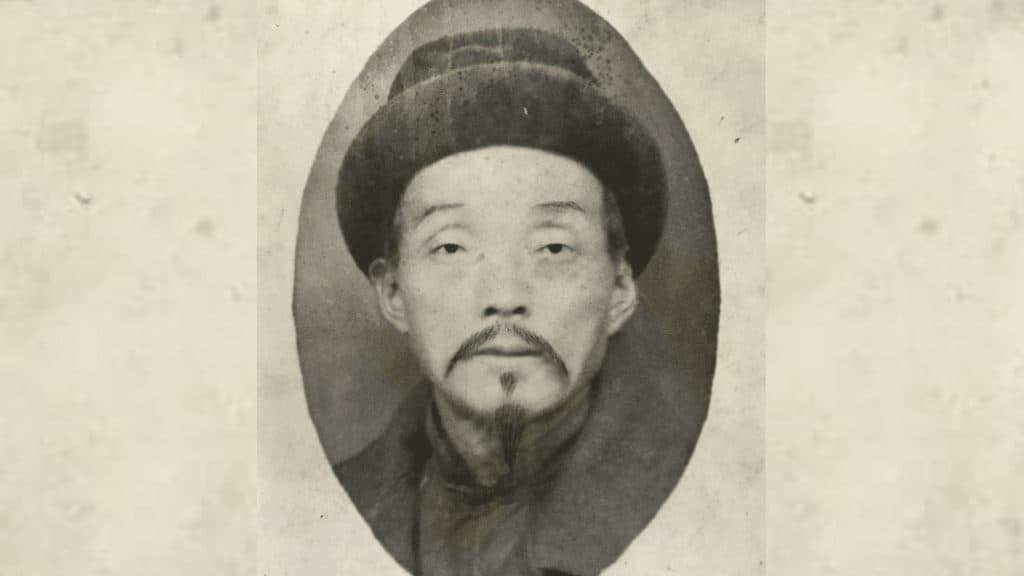
Wang Xiangzhai (1885–1963) was one of the most influential martial artists of the 20th century. A top disciple of the Xing Yi Quan tradition, particularly influenced by Guo Yunshen, Wang eventually moved beyond fixed forms to develop Yi Quan (“Intention Boxing”), later referred to as Da Cheng Quan (“Great Achievement Boxing”).
Wang emphasized:
- Zhan Zhuang (standing meditation) as the foundation of internal power
- Developing Yi (intention) over memorized techniques
- Real martial testing and practical application
He was openly critical of traditional martial arts that had become hollow—more focused on external choreography than internal substance—and sought to bring practitioners back to direct experience of internal force.

Closing Thoughts
Wang Xiangzhai was not against Taijiquan. On the contrary, he respected its roots and admired its great early exponents. What he opposed was the loss of its essence—a condition that continues to threaten many traditional arts today.
What are your thoughts on Wang Xiangzhai’s critique? Do you agree—or see things differently? Let us know in the comments.
Responses