One of Karate’s Most Important Historical Texts: The Ten Precepts of Itosu Ankō (1908)
Exploring the History of Karate: Itosu Ankō’s Ten Precepts (1908)
In February 2019, I had the opportunity to visit the Okinawa Karate Museum – 沖縄県空手博物館. This museum, founded in 1987 by Tetsuhiro Hokama Sensei, a highly skilled 10th dan Goju-Ryu Karate expert, is a remarkable repository of Karate history. It boasts an extensive collection of Karate artifacts, ancient weapons, manuscripts, photographs, books, and historical texts, making it a must-visit for anyone interested in the origins of Karate.
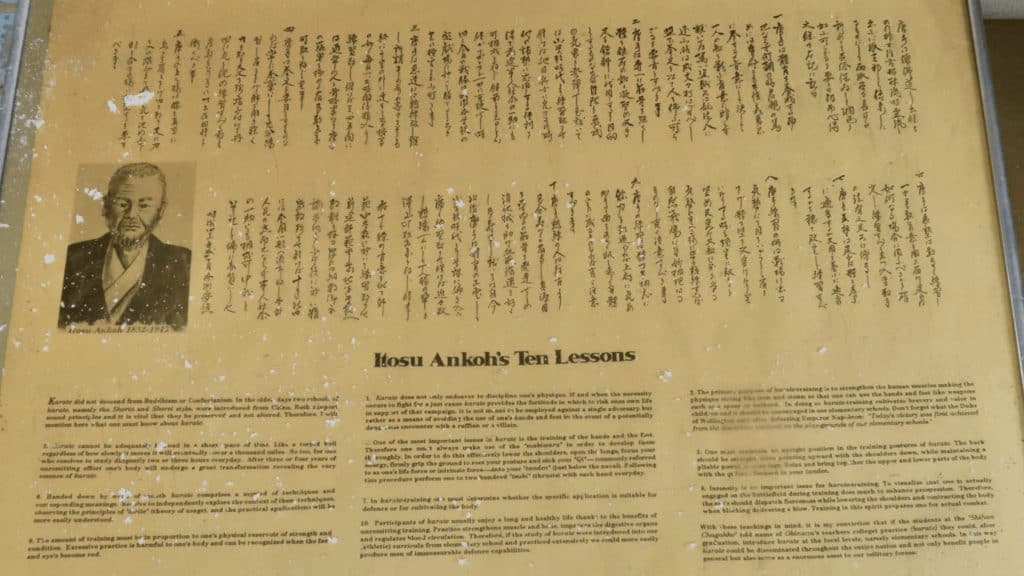
During a private tour, Hokama Sensei shared insights into his 70 years of collecting treasures. Among the numerous artifacts, a particular historical text caught my attention — ‘The Ten Precepts,’ written by Anko Itosu in 1908. This document outlines the foundational principles of Okinawan Karate as understood at the beginning of the 20th century. Mr. Hokama emphasized the paramount significance of these tenets, asserting that adherence to them is integral to genuine Karate practice. His words left a lasting impression, prompting a personal commitment to share these invaluable teachings through this article.
Itosu Ankō’s Ten Precepts of Karate (1908)
Original Japanese text with accurate English translation
Preface
Karate does not originate from Buddhism or Confucianism.
Though it was influenced by martial methods transmitted from China, karate developed independently in Okinawa into its present form.
空手は仏教にも儒教にもあらず。
古来、支那より伝来したる技法を基とし、今日に至り沖縄において発達したるものなり。
First Precept
Karate is not intended for use against a single opponent.
Its purpose lies in self-protection, the improvement of health, and the cultivation of character.
空手は決して一人の敵に対するためのものにあらず。
常に己が身を守り、健康を増進し、人格を修養するを目的とす。
Second Precept
The practice of karate aims primarily to strengthen the body and discipline the mind.
Through sustained training, one naturally acquires a strong and resilient physique.
空手の稽古は身体を強健にし、精神を鍛錬するを主とす。
久しく修練すれば、自然に剛健なる体躯を得る。
Third Precept
The study of karate requires many years.
It is not something that can be accomplished in a short period of time.
空手を修業する者は、必ず長年月を要す。
一朝一夕にして成るものにあらず。
Fourth Precept
Karate is particularly well suited for inclusion in elementary school physical education.
When practiced from a young age, it contributes to the cultivation of strong and healthy citizens.
空手は小学校の体操科に採用するを最適当とす。
幼少より修練すれば、強健なる国民を養成するに足る。
Fifth Precept
Karate does not train the hands and feet alone.
It strengthens the muscles, skeletal structure, and even the internal organs.
空手は手足のみにあらず。
筋肉、骨格、内臓に至るまで鍛錬するものなり。
Sixth Precept
Training should always begin gradually, avoiding sudden or excessive exertion.
Unreasonable practice causes harm to the body.
稽古は必ず徐々に始め、急激なる運動を慎むべし。
無理なる稽古は身体に害を及ぼす。
Seventh Precept
Maintain correct posture, regulate the breath, and apply strength naturally.
Excessive rigidity must be avoided.
姿勢を正し、呼吸を整え、力を自然に用うべし。
剛に過ぐるは不可なり。
Eighth Precept
Karate training is a lifelong endeavor.
One must not neglect practice, even for a single day.
空手の稽古は終生の事業なり。
一日も怠るべからず。
Ninth Precept
Karate techniques must never be used carelessly.
They should be employed only when there is no alternative.
空手の技は軽々しく用うべからず。
止むを得ざる場合のみに使用すべし。
Tenth Precept
When karate is practiced correctly, it cultivates humility, respect, and self-control.
In this way, it benefits not only the individual but society as a whole.
空手を正しく修業すれば、謙虚、礼節、自制を養う。
よって個人のみならず、社会にも益するものなり。
Itosu Ankō
October 1908
糸洲安恒
明治四十一年十月
Editor’s Note:
Many English versions of Itosu Ankō’s Ten Precepts of Karate circulating today include expanded interpretations intended for instructional or ideological purposes. This version aims to remain close to the original Japanese text written in 1908, preserving its educational tone while avoiding later additions.
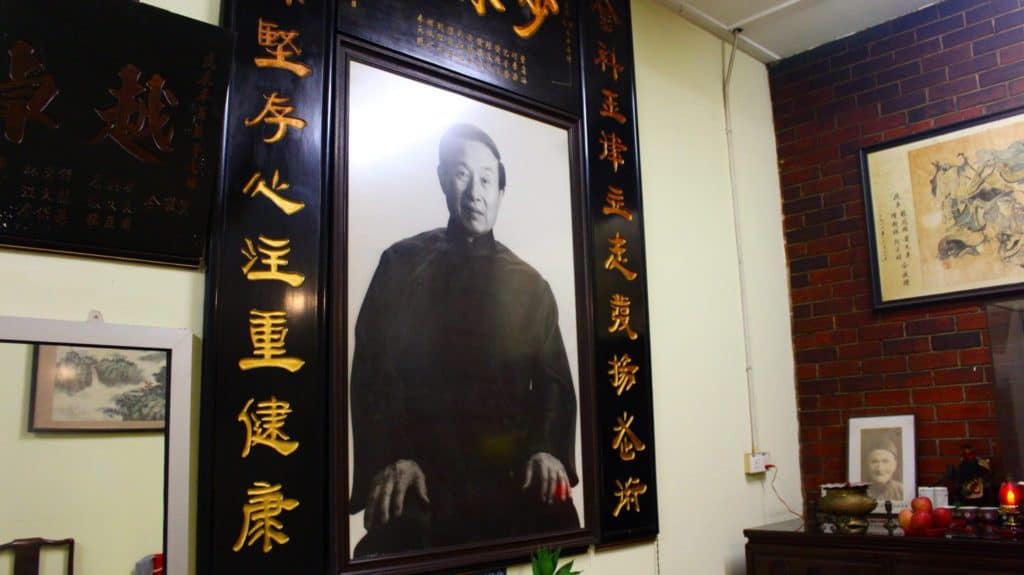
Photos taken inside the Okinawa Karate Museum – 沖縄県空手博物館


Great historical article !