The Missing Link in Tai Chi Power
Sink the Shoulders and Drop the Elbows
Many Tai Chi practitioners spend years searching for power in the legs, waist, and dantian. Entire discussions revolve around rooting to the ground, turning through the yao, and storing energy in the body’s centre.
Yet when contact is made with another person, something very different often happens.
Despite all the talk about internal mechanics, the power never reaches the hands.
Instead, the practitioner ends up pushing with the arms.
The reason for this is surprisingly simple. The shoulders and elbows are not organised correctly.
Within the classical teachings of Tai Chi Chuan, there is a line that addresses this problem directly. It appears in the famous Ten Essential Points recorded by Yang Chengfu:
“Sink the shoulders and drop the elbows.”
These words are repeated in almost every Tai Chi lineage, yet they are often interpreted as nothing more than a small correction of posture. Many practitioners assume the instruction simply means not to lift the shoulders too high or allow the elbows to flare outward.
In reality, this short line describes one of the most important structural relationships in the entire art.
If the shoulders and elbows are not organised correctly, the deeper mechanics of Tai Chi cannot function.
Where Power Gets Lost
Modern Tai Chi discussions frequently focus on generating power from the ground, rotating the waist, or storing energy within the lower dantian. These ideas are all part of the traditional framework of the art.
But there is a simple physical reality that is often overlooked.
Before any force can reach the hands, it must travel through the shoulders and elbows.
If those joints are tense, lifted, or disconnected from the rest of the body, the transmission of power stops there. The legs may generate force and the waist may turn correctly, but that power never arrives at the point of contact.
As Adam Mizner explains in his workshop on this subject:
“You might generate wonderful power in the legs and waist, but if you cannot transmit it to the hands, it’s useless.”
This is one of the most common problems seen in push hands and martial application. Even when practitioners have developed some skill in the legs and torso, the arms often remain disconnected from the body.
The result is that when pressure is applied, the shoulders tighten and the arms begin to push on their own.
What appears at the point of contact is no longer whole-body power.
It is simply arm power.
The Shoulder as the Gateway
The shoulders occupy a unique position in the structure of the body. They form the gateway through which the arms connect to the torso and legs.
If this gateway is open and correctly aligned, force can travel through the entire structure without interruption. The arms become extensions of the body rather than independent tools of strength.
If the gateway is closed through tension or poor alignment, that connection disappears.
The practitioner may still move smoothly during form practice, but the moment contact is introduced, the structure divides into separate parts. The legs generate force below while the arms attempt to handle that force above.
This is precisely the situation the classical instruction was designed to prevent.
Why the Shoulder Comes First
In the classics, the instructions “sink the shoulders” and “drop the elbows” are always presented together. They are often written almost as a single line.
This pairing reveals an important relationship.
According to Adam Mizner, the shoulder is the more causal element of the two.
“If the shoulder is incorrect, the elbow will always float.”
In other words, the elbow cannot truly sink unless the shoulder has already been set correctly.
Yet this does not mean the elbow can be ignored. Both qualities must be developed together, because they form the pathway through which force travels between the arms and the rest of the body.
When the shoulders settle into their proper position and the elbows release downward, the arms begin to connect naturally with the torso and legs.
Only then can the body function as a single integrated structure.
A Habit of Modern Life
One reason this principle is so difficult to develop lies in the habits of modern life.
Human beings use their arms constantly. Every time we type, drive, lift, or interact with objects in front of us, the shoulders become active. Over time these actions create deeply ingrained patterns of tension around the shoulder joints.
Most people gradually develop a posture where the shoulders are drawn slightly forward and the chest collapses inward. It is a position reinforced by years of working at desks, looking at screens, and directing attention outward.
These habits become so familiar that they are rarely noticed.
Yet in Tai Chi training the shoulders must behave very differently.
Rather than actively generating force, they must become passive and correctly positioned, allowing energy to pass through them without obstruction.
Achieving this requires both relaxation and openness within the tissues of the shoulder joint itself.
Knowing the Shoulder
Another important aspect of this training is learning to perceive the shoulder directly.
Many practitioners know the idea of a shoulder but cannot actually sense the structure of the joint in any meaningful way. When a teacher instructs them to drop the shoulders, they may move them several inches without realising how much tension was present before.
True correction requires something deeper than intellectual understanding.
It requires direct perception.
In training this means becoming aware of the different components of the shoulder mechanism — the upper arm bone, the clavicle, and the scapula — and observing how they interact during movement.
Through this process the shoulder is no longer an abstract concept. It becomes a living structure that can be felt, opened, and organised.
Opening the Shoulder
Because the shoulder is so central to the connection of the arms, many traditional exercises focus specifically on opening this area of the body.
Movements that stretch the fascia around the joint, pull the elbows apart, and rotate the arms in opposing directions gradually create space within the shoulder mechanism.
Over time this openness allows the shoulder to settle naturally into its correct position.
Only then can the elbow truly sink.
When the shoulder remains closed or misaligned, the elbow will always float. But once the shoulder is set correctly, the elbow begins to release downward and outward as part of the body’s natural structure.
At that point the arms start to behave very differently.
Instead of resisting force locally in the shoulders, the body begins to transmit and transform that force through the entire structure.
A Rare Skill
Although the instruction itself is simple, the skill it describes is surprisingly rare.
Adam Mizner has noted that among all the practitioners and teachers he has encountered, only a handful have truly set their shoulders correctly.
This illustrates how subtle and demanding the principle really is.
Correcting the shoulders requires patience, honesty, and a willingness to examine the body with great detail. It cannot be achieved through imitation alone but must develop gradually through training and observation.
Yet the reward is profound.
When the shoulders settle and the elbows sink naturally, the arms begin to connect to the torso and legs in a way that allows the whole body to operate as a unified system.
This is one of the foundations of internal power.
A Closer Look at the Principle
Because the relationship between the shoulders and elbows is so fundamental to Tai Chi structure, it deserves careful and detailed study.
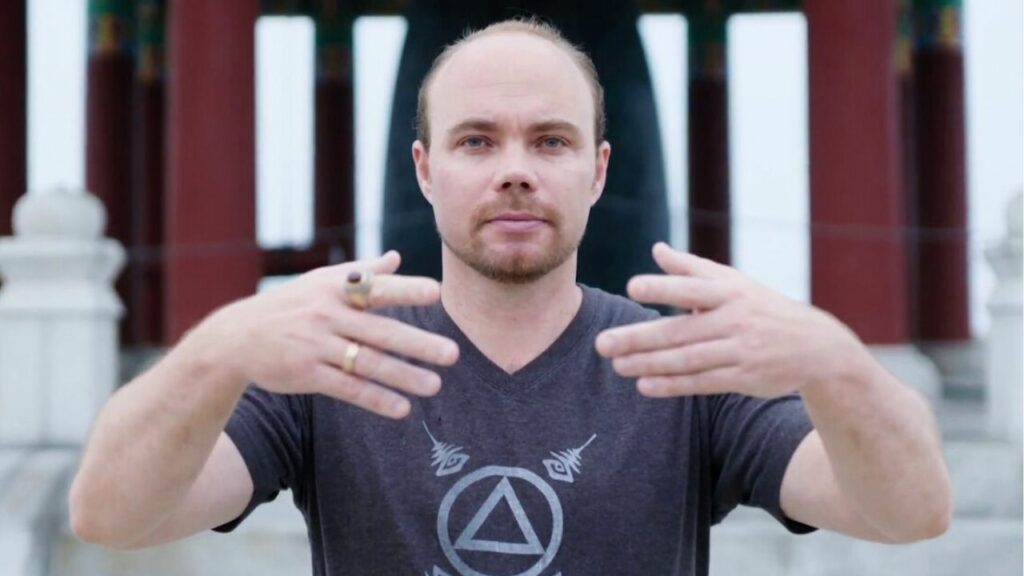
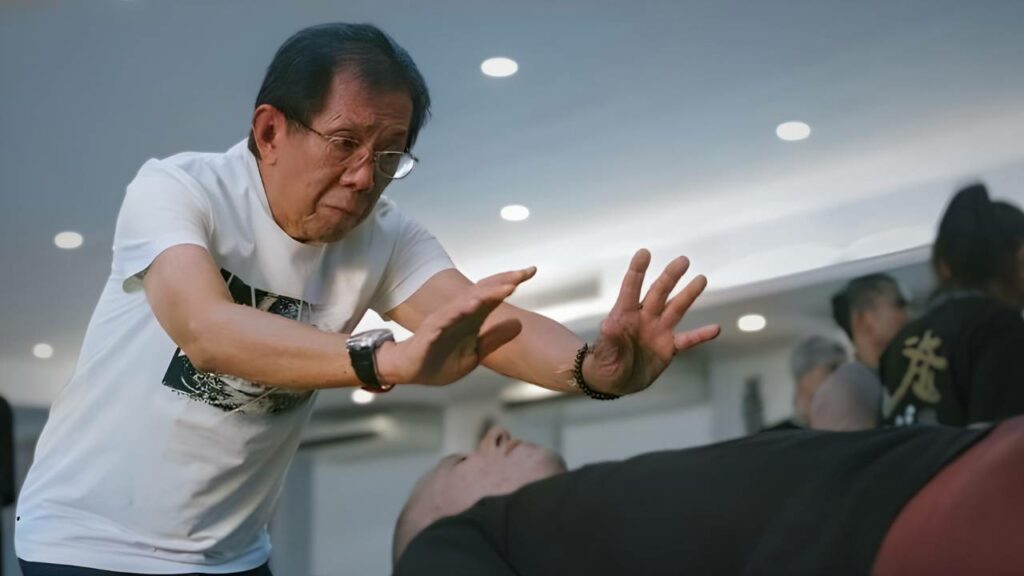
In the workshop Sinking the Elbows and Shoulders in Tai Chi Chuan, Adam Mizner explores this principle in depth, demonstrating a series of exercises designed to open the shoulders, develop awareness of the joint structure, and cultivate the correct relationship between shoulder and elbow.
Rather than treating the phrase “sink the shoulders and drop the elbows” as a simple posture cue, the workshop investigates how this principle actually functions inside the body — and why it is essential for transmitting and receiving force.
For many practitioners, exploring this aspect of training can completely change the way the arms connect to the body.
The workshop is available now on The Martial Man – Online Community, where the full explanation and exercises can be studied in detail.
Returning to the Essentials
One of the deeper lessons of Tai Chi practice is that the most important discoveries are often hidden within the simplest instructions.
Generations of masters preserved these teachings not because they were poetic, but because they described practical realities within the body.
As Yang Chengfu reminded us:
“If the shoulders rise, the whole body loses strength.“
When the shoulders settle and the elbows sink, the body begins to move as the classics intended — unified, connected, and capable of transmitting power through every part of the structure.
What once seemed like a simple sentence becomes something far more profound.
And for those who pursue the principle deeply, it can change the entire experience of Tai Chi practice.

Responses