San Zhan: Understanding the Internal Core of Southern Shaolin
An introduction to San Zhan as a method of internal development within Southern Shaolin, and the foundation of Master Yap Boh Heong’s San Zhan course.
San Zhan (三戰), most often translated as “Three Battles,” is one of the most enduring and foundational forms within the Southern Chinese martial arts. It appears across multiple Fujian-based systems, is commonly taught early in training, and is often regarded as a hard, demanding practice designed to strengthen the body and condition the practitioner. Yet despite its widespread presence, San Zhan remains one of the most misunderstood forms in the traditional curriculum. The misunderstanding does not lie in how often it is practiced, but in why it is practiced at all.
In many schools, San Zhan is treated as a rite of passage — something to be endured, survived, and eventually left behind in favor of more complex forms. This approach quietly strips the form of its real function. San Zhan was never intended as a preparatory exercise in the ordinary sense. It was designed as a method for reorganizing the body internally, establishing the structural and energetic conditions upon which all higher-level skill depends.
Why San Zhan Appears Across So Many Southern Systems
The persistence of San Zhan across so many Southern systems offers an important clue to its original role. It is found in Five Ancestors Fist (Wu Zu Quan), White Crane, Taizu Quan, and related traditions that later influenced Okinawan Karate, where it became known as Sanchin. The external expressions differ — sometimes subtly, sometimes dramatically — but the underlying problem they address is the same.
Traditionally, San Zhan is structured as an opening section, a central “three battles” sequence of advancing and retreating steps, and a concluding section — each serving a specific internal function rather than simply marking progression through the form.
All of these systems grapple with a fundamental question: how to develop a body that can generate force, maintain stability under pressure, and transmit power efficiently without relying on excessive muscular tension. San Zhan exists because this problem cannot be solved through technique alone.
A Lineage-Based Perspective on San Zhan
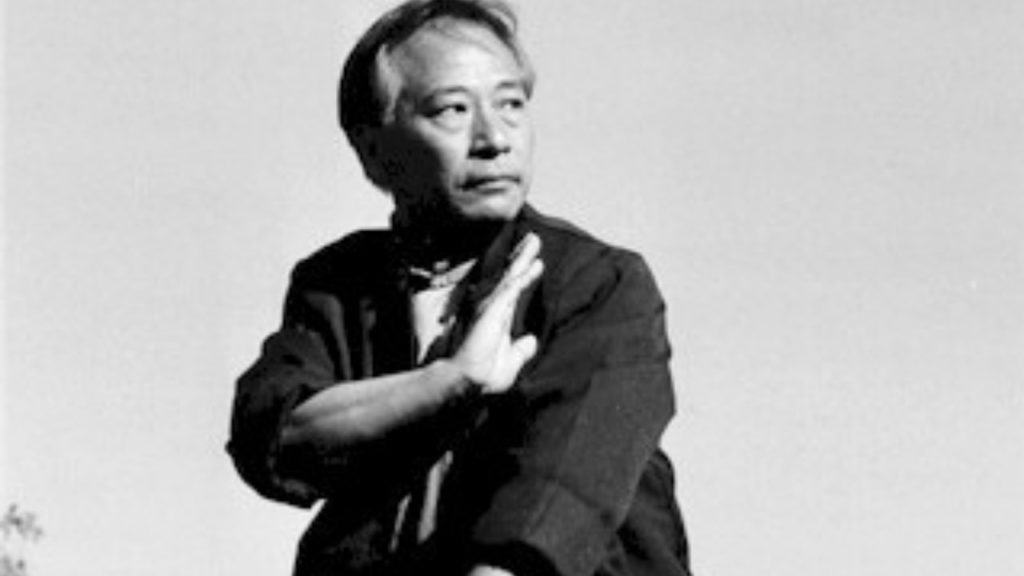
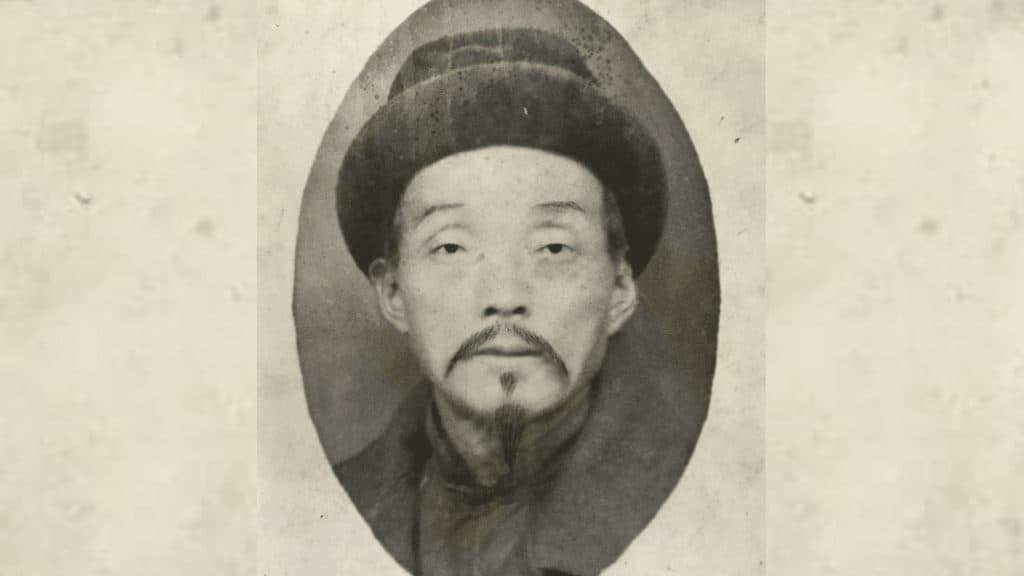
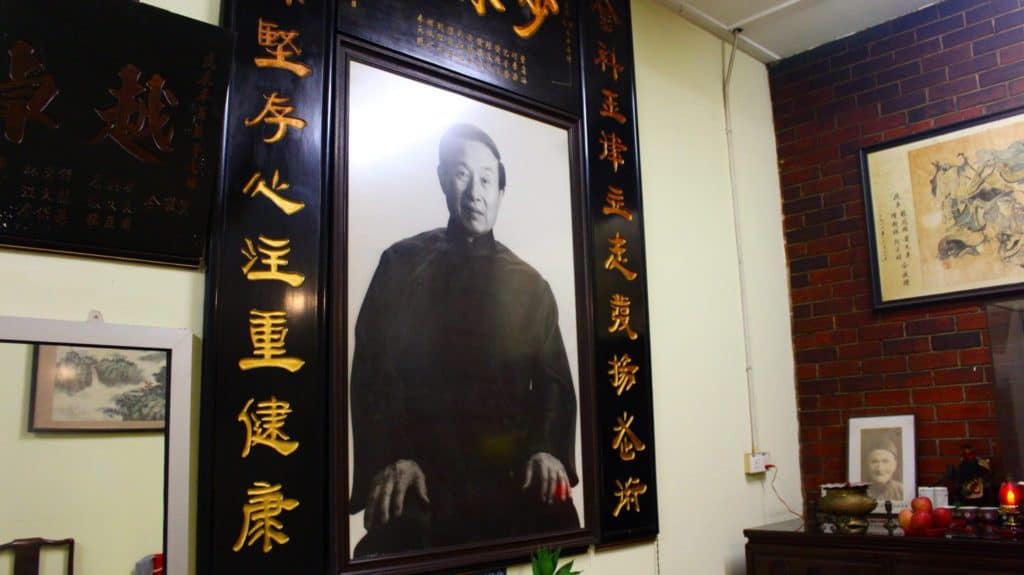
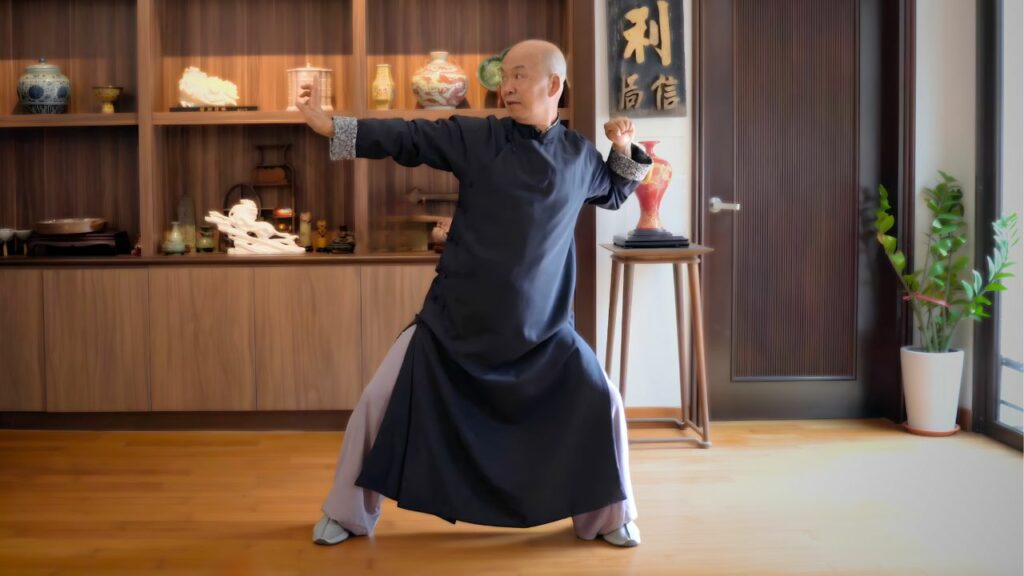
The perspective presented here comes through the Southern Shaolin Five Ancestors tradition, as preserved within the Chee Kim Thong lineage, and articulated by Yap Boh Heong, a senior lineage holder known for emphasizing internal method over external display. This context matters, not as a matter of authority or reputation, but because San Zhan only reveals its function when it is taught as a process, not as a performance.
Within Five Ancestors Fist itself, each ancestor contributes a distinct expression of San Zhan — Taizu, Luohan, White Crane, Monkey — each shaping the body in a particular way. The version taught in this course is known as Da Mo San Zhan, associated with Bodhidharma, the Fifth Ancestor, whose contribution emphasizes internal cultivation over external conditioning.
Why San Zhan Is Commonly Mistaken for a “Hard” Form
One of the reasons San Zhan is so often misclassified as a “hard” form is that it becomes hard when practiced incorrectly. When alignment is imprecise, the body compensates with tension. When posture is misunderstood, breathing becomes forced. When the structure collapses internally, effort replaces function.
In its correct expression, San Zhan does the opposite. The stance, torso, and arms are arranged so that the skeleton bears load efficiently and the fascia and tendons organize into continuous lines of support. As this alignment stabilizes, the body stops fighting gravity and begins to settle into it.
San Zhan as Internal Cultivation
This settling is not relaxation in the casual sense, nor is it passivity. It is a precise internal condition in which unnecessary tension is released while structure is maintained. Only from this state does breath assume its proper role — not as a technique imposed upon the body, but as a natural driver of internal movement.
At this stage, San Zhan functions as internal cultivation, even though it bears little resemblance to what most people associate with Qigong. Internal force — often described as Qi or Jin — emerges not because it is generated, but because the body is no longer obstructing it.
Why the Form Alone Is Never Enough
This is why San Zhan has traditionally been referred to as a “mother form.” It does not teach techniques in the usual sense. It teaches the body how to behave so that techniques can function. Over time, this training produces qualities that cannot be imitated: stability without rigidity, strength without strain, and sensitivity upon contact.
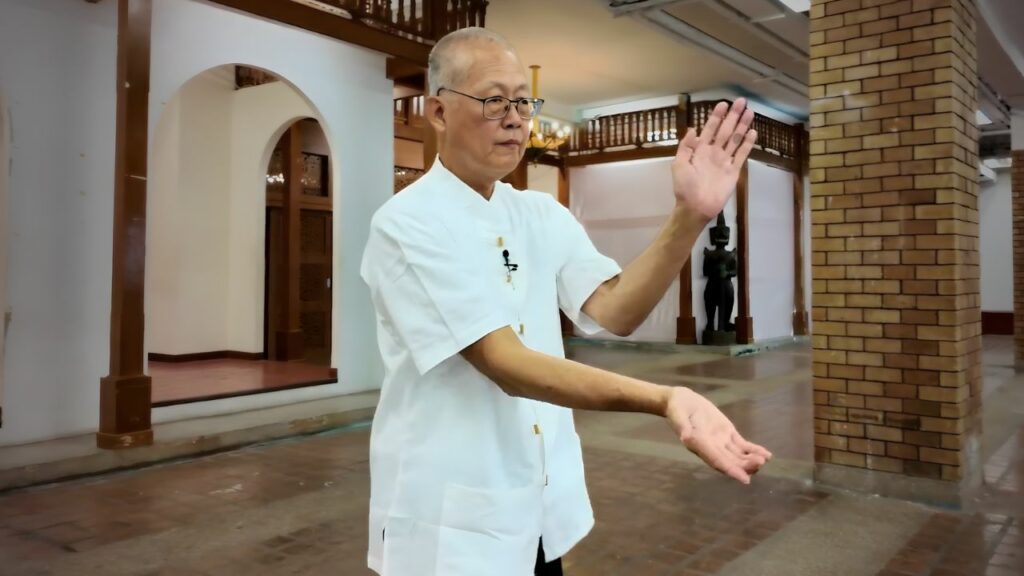
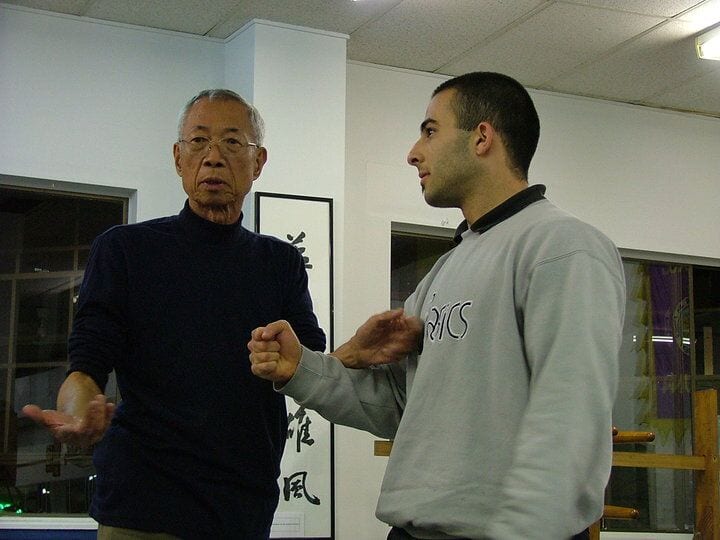
In live teaching, Master Yap emphasizes that San Zhan is not meant to be learned by accumulating movements, but by deepening understanding within each posture:
When learning a form, you can take two approaches. Either you learn many movements, or for each movement you dig deep down. Each movement has significance — how you use the fascia, how you generate power, how you apply it, and even its Qigong aspect. For us, we choose to go deep, because it gives more meaning to the form.
It is entirely possible to perform San Zhan accurately and still miss all of this. The choreography is only the container. What matters is whether the training leads to genuine internal reorganization, improved force transmission, and resilience that supports health rather than erodes it.
Relevance Beyond Southern Shaolin
Although rooted in Southern Shaolin, San Zhan is not limited to a single tradition. Practitioners of Wing Chun, Hung Gar, White Crane, and Karate all train systems that descend from the same structural logic, whether or not that logic was ever made explicit.
San Zhan does not ask practitioners to abandon their style. It asks them to understand what their style was originally attempting to build in the body.
San Zhan: Mastering Southern Shaolin’s Ancient Art
For readers who wish to explore San Zhan beyond written explanation, there is a natural next step.
San Zhan: Mastering Southern Shaolin’s Ancient Art is a comprehensive online course taught by Yap Boh Heong, presenting San Zhan as a method of internal development within the Southern Shaolin Five Ancestors tradition. The course covers correct structural alignment, breath integration, internal force development, sensitivity, and practical understanding of the form as it is traditionally trained. It is intended for practitioners who want to move beyond choreography and understand how San Zhan actually works.
Responses