

Qi Gong for Spinal Healing
Why the Spine Is the Center of Internal Training, Health, and Longevity
In the internal arts, the spine is not viewed as a simple structural column whose job is merely to hold the body upright. It is understood as the central axis of life—the meeting point of structure, nervous system, breath, and energy. When the spine is healthy, open, and responsive, the entire system benefits. When it is compromised, health gradually deteriorates, often in ways that seem unrelated at first.
Many people only begin to take spinal health seriously after pain, injury, or limitation appears. In authentic Qi Gong and internal training, however, spinal work is not reactive. It is foundational.
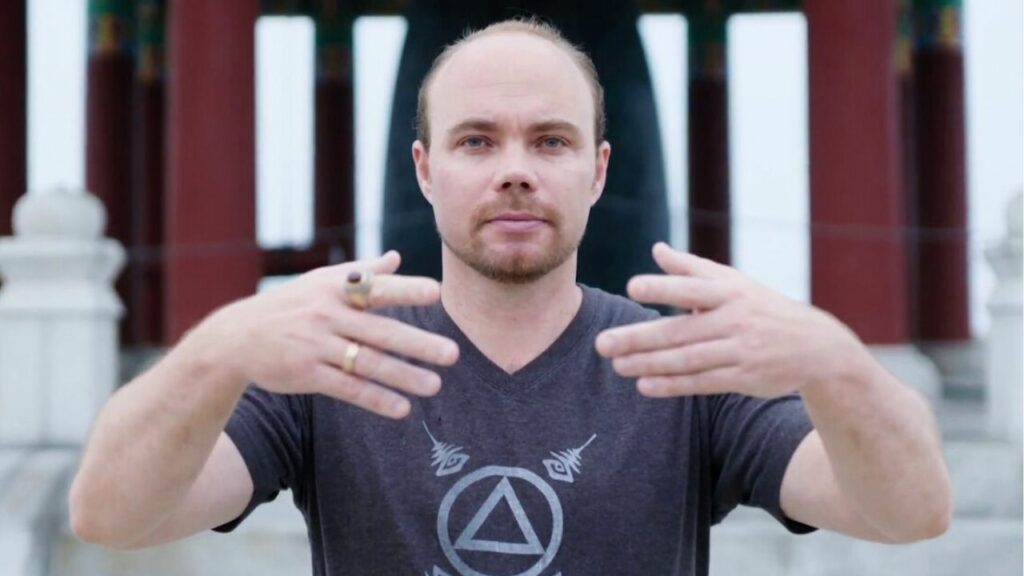
Few people understand this more directly than Adam Mizner.
When Conventional Answers Run Out
Adam Mizner has spent more than two decades immersed in internal training. Yet even with that background, life placed extraordinary demands on his body.
He suffered two major spinal injuries. The first involved a fracture of C7 at the base of the neck, with serious disc damage. Several years later, a motorcycle accident resulted in the complete rupture of the L5–S1 and L4–L5 discs, with disc material pressing into the nerves and leaving, in effect, no disc remaining.
After consulting some of the most respected spinal surgeons in Asia, the verdict was unanimous: surgery was unavoidable, and his training days were over.
For someone whose life revolved around internal work, this was not an acceptable endpoint.
Rather than surrendering his body to procedures that offered no guarantee of genuine recovery, Adam withdrew into retreat and applied his internal skills—methodically, patiently, and without force. The result was not theoretical or symbolic. It was a functional recovery, built through correct Qi Gong methods and a deep understanding of how the spine responds to alignment, openness, and internal circulation.
The exercises he now teaches in Qi Gong for Spinal Health are drawn directly from that lived experience—not as promises, but as methods.
Who This Training Is For
This work was not created solely for elite internal practitioners. It is intended for anyone who recognises that spinal health is central to long-term well-being.
It is suitable for:
- People recovering from old spinal injuries
- Those dealing with stiffness, poor posture, or chronic tension
- Martial artists and Tai Chi practitioners seeking longevity rather than degeneration
- Meditators who want a body capable of supporting deeper internal work
- Beginners drawn to Qi Gong as a practical method rather than a belief system
No prior experience is required. At the same time, the material has sufficient depth that experienced practitioners consistently recognise its value.
The Spine as a Living System
Modern approaches to spinal health often focus on posture cues, stretching routines, or isolated rehabilitation exercises. While these can be helpful, they rarely address the spine as a living, integrated system—one that must conduct nervous signals, circulate fluids, and transmit Qi without obstruction.
In Qi Gong, the spine is developed through several interrelated qualities. Each supports the others. None stand alone.
1. Straightening – Aligning the Bones
The first requirement is structural integrity.
If the skeleton—especially the spine—is misaligned, the nervous system is compromised and internal circulation becomes distorted. Adam strongly recommends working with a skilled traditional Qi Gong bone setter where possible, particularly in cases of severe misalignment.
At the same time, correct internal training naturally encourages the spine to realign itself. This is not forced correction. It is alignment that emerges as habitual tension releases and the body reorganises itself from within.
2. Stretching – Making the Spine Conductive
This form of stretching is not about contortion or muscular strain.
Rather than pulling the body into shapes, spinal Qi Gong stretches the spine the way one would tune a stringed instrument. A string must be neither slack nor over-tightened. When tension is correct, it becomes conductive.
In the same way, a properly stretched spine allows Qi to move smoothly up and down, supporting nervous system health and maintaining vitality over time.
3. Opening – Creating Space Between the Vertebrae
A compressed spine is a restricted spine.
Opening the spine means creating space between each vertebra, allowing freedom of movement and preventing the compression that leads to pinched nerves, inflammation, and chronic pain.
This openness has another important effect. In internal work, emptiness draws fullness. When space is created, Qi, blood, and fluids are naturally drawn into those areas, nourishing discs, nerves, and connective tissue.
4. Pumping – Circulating Qi, Blood, and Fluid
Once alignment, stretch, and openness are present, the spine must be internally animated.
Through subtle pumping actions, Qi Gong trains the body to circulate Qi, blood, and fluids up and down the spine. This keeps the nervous system responsive and prevents stagnation, supporting both healing and long-term spinal youthfulness.
5. Articulation – Bringing the Spine Under Command
Perhaps the most overlooked quality is articulation.
If a part of the body is not under conscious control, the connection between mind, Qi, and body is incomplete. Over time, that area deteriorates.
A healthy spine must be able to articulate freely, vertebra by vertebra, under clear intent. This is not about large external movements, but about internal responsiveness and command.
A Coherent System, Not Random Exercises
The training Adam presents is not a collection of disconnected techniques. Each exercise develops a specific quality while reinforcing the others.
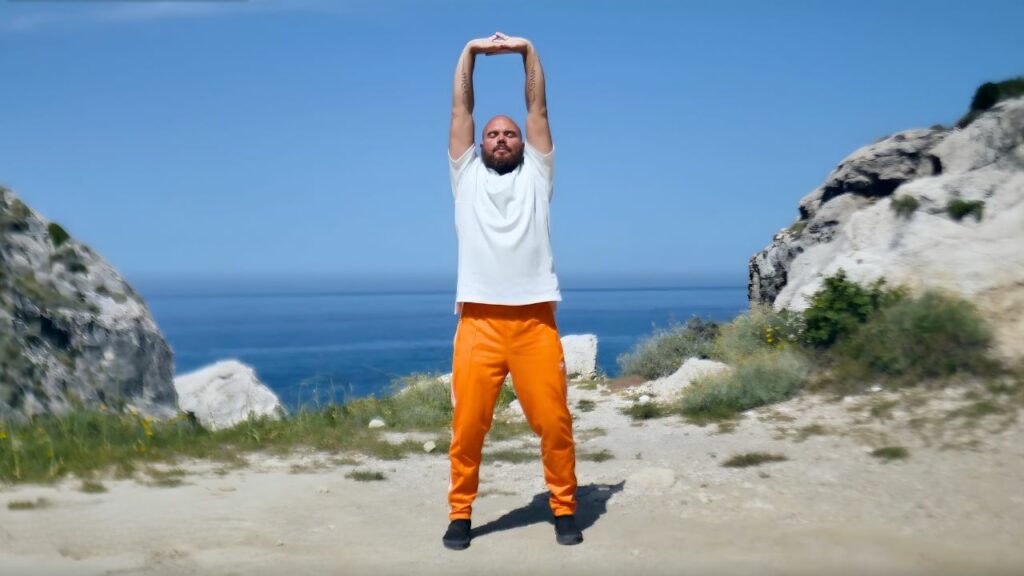
The practices include foundational Qi Gong movements such as Separating Heaven and Earth, The Bull Stretch, The Bike Chain, The Pagoda, and The Fourth Song Gong. Together, they form a coherent system that can be practiced as a whole or drawn upon individually as needed.
For many practitioners, this coherence is immediately apparent.
“These are really apparently simple yet profound movements through which I could immediately experience beneficial responses throughout my spine and whole body.”
— Robert Roy Baranes
What Practitioners Commonly Experience
The effects of this work are not abstract. Students consistently report increased mobility, reduced pain, and a renewed sense of internal connection—often after years of limitation.
“Once through the first four exercises was enough to get total pain relief. I got better results doing spinal Qi Gong once than I had with six weeks of physical therapy.”
— Nikolai Thompson
What a Session Looks Like
The course itself is concise and practical. Across six pre-recorded lessons—totalling approximately ninety minutes—Adam introduces core principles and then teaches a small number of precise exercises that can be incorporated into daily practice.
Sessions are slow, deliberate, and guided throughout. They are not aggressive, exhausting, or forceful. The emphasis is on correct alignment, relaxation, and sensitivity, allowing the spine to lengthen and reorganise naturally.
This makes the training accessible even to those with current limitations, while still offering depth for experienced practitioners.
A Note on Safety and Responsibility
This work is not about pushing through pain or forcing results.
Qi Gong operates through listening, release, and correct intent. Progress comes from patience rather than strain. While many people report significant improvements, these exercises are a method of training and self-care—not a substitute for medical diagnosis or treatment.
The Spine as the Center of Well-Being
The spine houses and protects the central nervous system. It is the primary channel through which information, sensation, and energy move. When it is neglected, decline can feel inevitable. When it is trained correctly, health becomes something you actively participate in.
As one practitioner put it simply:
“Only if I found it years ago.”
— Tonja
Qi Gong for Spinal Healing with Adam Mizner is an invitation to take responsibility for that centre—quietly, methodically, and before deterioration becomes the only teacher.

Responses