What you’ll learn
- The reality of training inside a traditional Okinawan dojo, beyond demonstration or performance
- The 1.5 hours of physical conditioning expected before class even officially begins
- Wrist-grab defenses built on angles, leverage, footwork, relaxation and breath
- How the hard/soft (go/ju) principles are applied to attack the nervous system
- Pressure-point and nerve techniques targeting the hands, legs and feet
- The secrets hidden in plain sight within the design of the Okinawan Gi
- The role of San-Chien (Sanchin) breathing as the foundation of the system
About this course
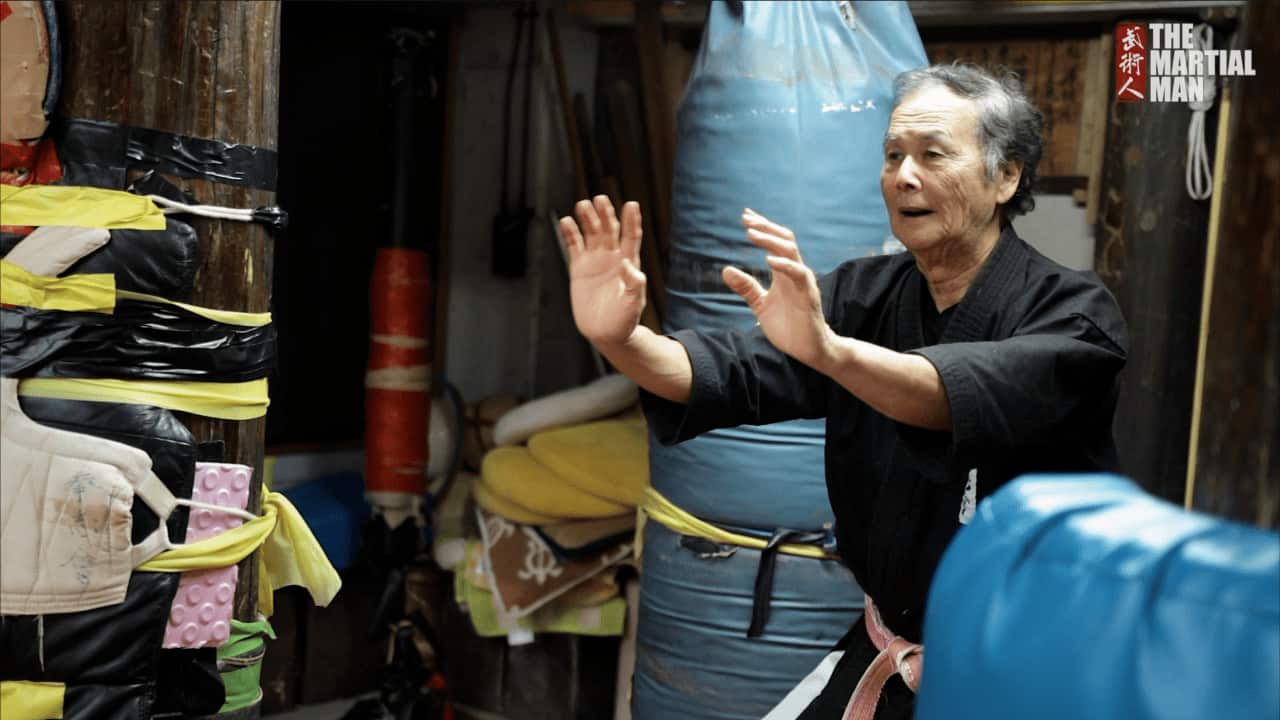
This exclusive five-part documentary takes you inside the world of traditional Okinawan Goju-Ryu Karate. Filmed during my time training at Tetsuhiro Hokama Sensei’s dojo in Okinawa, it offers a rare, first-hand look at how Karate is practiced at its source — far beyond what is typically seen outside Japan.
This is not a performance or a demonstration. From the structure of the classes to the conditioning, the applications, and the hidden details woven through the system, it is real training, captured as it happens. If you’ve ever wondered what it’s genuinely like to train in Okinawa, this is your chance to step inside.
Across the series, I break down the reality of training at the source:
Episode One — What to actually expect if you travelled to Okinawa and walked into a Karate class, including the 1.5 hours of physical conditioning you’re expected to complete as a “warm-up” before the real teaching even begins.
Episode Two — A sequence of applications that form the building blocks for defending against wrist grabs: angles, leverage, footwork, relaxation, engaging the tendons, and the breath developed through the practice of the San-Chien (Sanchin) form.
Episode Three — Two complex applications that show the “hard/soft” principles of Goju-Ryu in action, attacking the nervous system by crushing the ulnar nerve in the hand and fingers while simultaneously damaging the sciatic and tibial nerves in the legs and targeting two acupuncture points on the top of the feet.
Episode Four — A further sequence of wrist-grab defences built on angles, leverage, footwork, relaxation, and striking, with the ability to flow and change depending on your opponent’s resistance.
Episode Five — The secrets hidden in plain sight within the Okinawan Gi. A horizontal line on the back conceals a vital point on the midline between the sixth and seventh thoracic vertebrae — strike it correctly and you can immobilise and restrain your opponent. Why are there slits on both sides of the Gi? Why do you tie the belt knot below the navel? All of this is revealed in the final episode.
Every episode includes subtitles in five languages — English, French, German, Italian, and Spanish.
Course content
1 section · 5 lessons · 1h 7m
Your teacher
Student reviews
10 reviews

“Thank you so much for this series on Goju real karate. I really enjoyed it, and what I love most is how it breaks open the belief that karate is just about punching and kicking — there is so much more depth to it than most people realise. It also brought back a wonderful memory.…”

“Really appreciate the way the training is shown to begin with. The commentary explanations along side the video is helpful, as well as the 1st person experience of his being in the class. Very well, done!”

“Great interviews, great footage”

“A nice presentation allowing you to broaden your own knowledge of this style of karate.”

“You could spend your life exploring martial arts theory and practice. These courses can help you gain a lot of knowledge now to give you a boost in your growth.”

“I'm enjoying the videos so much as they contain a lot of useful information.”
“I liked the fact that the techniques utilized Kyusho jutsu which underlies all technique at the subtle level. Without a working knowledge of the 5 elements or at least the less obvious vulnerabilities of the human form it’s hard to get soft. I do wish the graphics pertaining to the Kyushu points were more visible…”

“I am not a practitioner of the Okinawan arts though found the course interesting, informative and giving material than could be added to ones personal practice regardless of tradition. Though a lot was shared disappointed than the part that really caught my attention was not shared whole as rightly so considered a closed door secret.”

“I learned many things in this course. Martial man is a good teacher and video is good. I recommend.”
“I have discovered how to relax and use the tendons after listening to your explanations in this fabulous course. I wasn’t taught even a fraction of this during my 15+ years of training Goju Ryu back in the 80s. Now, I have to practice these techniques with my students and training partners. Thank you kindly.”